What is a Healthy Muscle?
Hi everyone, I hope Summer has been treating you well.
When most people think about healthy muscles, they picture someone who is strong or muscular.
But that’s only part of the story.
I’ve worked with plenty of people who could lift a lot of weight and still had chronic pain. I’ve also seen people who weren’t particularly strong, but moved beautifully and had very few aches and pains.
So what actually makes a muscle healthy?
A Healthy Muscle Is More Than Just Strong
A healthy muscle has 3 important characteristics.
1. It has appropriate strength.
A muscle should be strong enough to do its job. Weak muscles force other muscles to compensate, and that’s often where injury begins.
Every muscle has a baseline, expected strength value compared to a person’s age and body weight.
Your muscles should meet those minimum requirements of strength. If they don’t, then they are weak and weak muscles will need help from other muscles which creates compensations and imbalances.
2. It has the right relationship with the muscles around it.
Your body is a system of checks and balances. Every muscle has another muscle that helps or opposes it.
For example:
- Your quadriceps should balance your hamstrings.
- Your chest should balance your upper back.
- Your abdominals should balance your spinal muscles.
When one group becomes much stronger than another, the body starts pulling itself out of alignment.
In addition to asking, “Are you strong?” I want to answer a second question: “Are you strong in the right proportions?”
3. It has normal flexibility.
A healthy muscle has enough flexibility to allow the joint to move through its normal range of motion, but not so much that it becomes unstable.
Being flexible isn’t always better.
Too little mobility can create stiffness and pain.
Too much mobility without adequate strength can create instability and injury.
The goal is balanced movement.
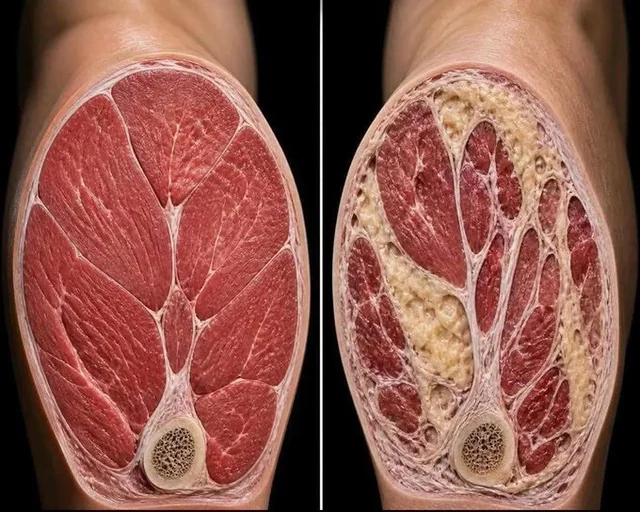
What Does an Unhealthy Muscle Look Like?
In my experience, unhealthy muscles usually have at least one or more of these characteristics.
An unhealthy muscle may be:
- Weak
- Overactive
- Underactive
- Chronically shortened
- Chronically lengthened
- *Painful
- Fatigues easily
- Unable to control movement properly (uncoordinated)
The interesting thing is that healthy muscles don’t hurt. That confuses a lot of people, but outside of exercise soreness, your muscles should not be in pain. It’s common to have painful muscles, but it’s not normal. So pain is a sign of an unhealthy muscle.
How Do We Identify the Problems?
This is where a thorough assessment system becomes vital.
One of my early mentors David Weinstock used to say “Test don’t guess.” I’ve followed that philosophy now for over 10 years in my work.
The two most useful tests are:
- Range of Motion Testing
Can each joint move through the amount of motion it was designed for?
Restrictions often point toward muscles that have become chronically shortened or joints that aren’t moving well.
We go into the office and move each joint to touch it, feel it, and track its range of motion.
- Strength Testing
Can each muscle produce the amount of force it should?
More importantly, is it producing the right amount of force compared to the muscles around it?
This is why I don’t just test whether someone is “strong.”
I want to know whether the entire system is balanced.
We go into the gym and exercise each muscle in isolation to track and quantify how strong it is.
How Do We Correct an Unhealthy Muscle?
Once we identify the imbalance, the correction becomes much more straightforward.
Generally speaking, we follow two principles.
First, calm down the muscles that are doing too much.
This may involve:
- Medical massage
- Soft tissue release
- Stretching
- Joint traction
- Improving movement patterns
The goal is to reduce excessive tension and allow those muscles to stop compensating.
Second, strengthen the muscles that aren’t doing enough.
This is where corrective exercise becomes so important.
The weak muscles need to become stronger so they can resume the job they were designed to do.
When both sides of the equation are addressed, posture improves, movement becomes more efficient, and pain often begins to decrease.
The Goal is Muscle Longevity
What is the long-term goal for your muscles? We want each muscle to follow this progression.
- Balance
- Strength
- Optimization
- Injury Resilience
- Longevity
The end game is muscle longevity. But what does that mean?
It means preventing early Sarcopenia and Osteoarthritis.
It means avoiding unnecessary joint replacement surgery.
It means hiking, biking, playing with kids and staying mobile into your 80s, maybe even 90s.
When your muscles are working together instead of fighting each other, your joints experience less stress, movement becomes easier, and your body is better prepared for everything from gardening to hiking to lifting your grandkids.
Healthy muscles aren’t just stronger.
They’re balanced and that means they live longer.
See you at your next appointment,
Brandon